// Service
Cloud architecture, hybrid infrastructure & migrations
Cloud where it saves money or adds resilience, your own hardware where it is cheaper. Architecture designed around your real usage and budget, on OCI, AWS or Azure.
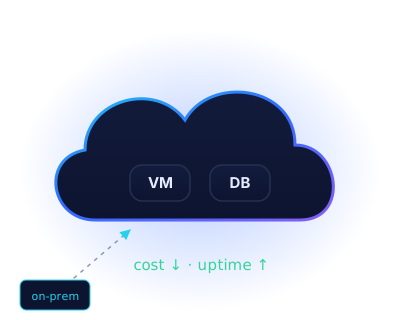
Cloud architecture that minimizes cost
Many cloud bills are too high not because cloud is expensive, but because the setup copies a data centre: big VMs running 24/7, unused disks, data paying egress twice. We design for what you actually use.
- Right-sizingFlexible VM shapes, autoscaling, scheduled shutdown of dev/test, reserved or committed capacity only where it pays.
- Managed where it helpsManaged databases, object storage and load balancers when they reduce work; plain VMs when they are simpler and cheaper.
- Storage tiersHot, cool and archive storage with lifecycle rules, so old data does not cost like new data.
- Cost visibilityTagging, budgets, alerts and a monthly one-page cost report with concrete savings.
Hybrid infrastructure
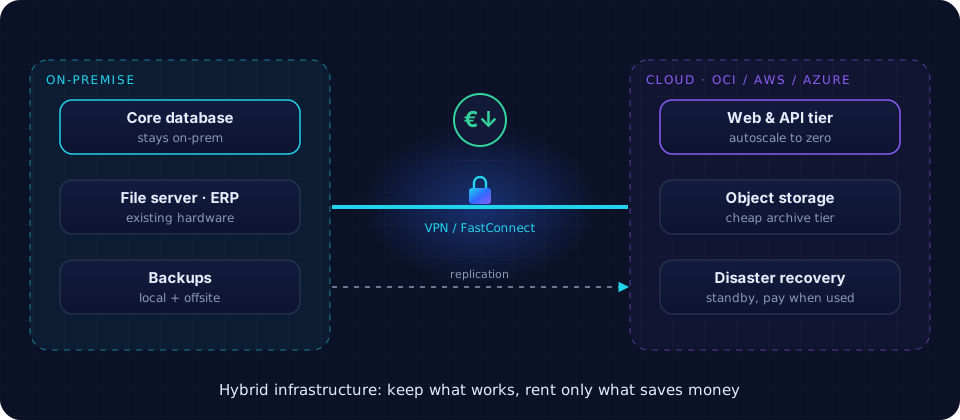
You don't have to move everything. Keeping core databases or file servers on existing hardware while using the cloud for web services, backups or disaster recovery is often the best value. We connect both sides securely with VPN and make them work as one.
Cloud migrations: OCI, AWS, Azure
- Assess: inventory of servers, data and dependencies; a cost comparison of staying, going hybrid or moving fully.
- Design: target architecture, network, security, backup and a migration plan with rollback.
- Pilot: move one non-critical workload first and measure performance and cost.
- Migrate: move the rest in waves, with minimal downtime and verified data.
- Operate: monitoring, patching and regular cost reviews, or a clean handover to your team.
Frequently asked questions
Which cloud do you recommend: OCI, AWS or Azure?
It depends on what you run. OCI is often cheapest for Oracle workloads and simple VMs, Azure fits Microsoft-centric companies, AWS has the widest service range. We compare them for your case with real numbers.
Can moving to the cloud save money?
Sometimes a lot, sometimes not at all. Steady workloads on existing hardware can be cheaper on-premise. We tell you honestly, and hybrid setups often give the best balance.
How do you avoid downtime during migration?
By migrating in waves, replicating data before the switch, testing each step and keeping a rollback path until the new environment is proven.